


Memory, Metacognition and the TAB Learning Challenge
Memory and Metacognition
'The knowledge organisers are like having a brain outside your body because they help you to remember the learning and it gives you something to look at so you can be more independent and not rely on the teacher so much' (Year 5)
'The talk phrases have helped me to be able to politely disagree with people in class when having a discussion but I have also been able to use them in the playground to support my friends when they look like they are about to get into an argument and help it to calm down!' (Year 6)
At Thomas A Becket Junior, our curriculum is designed so that children build and understand their knowledge of different subjects, applying this as skills within different topics and specialist environments. Teaching staff regularly formatively assess the children's understanding to adapt their teaching where necessary ensuring that concepts are remembered.
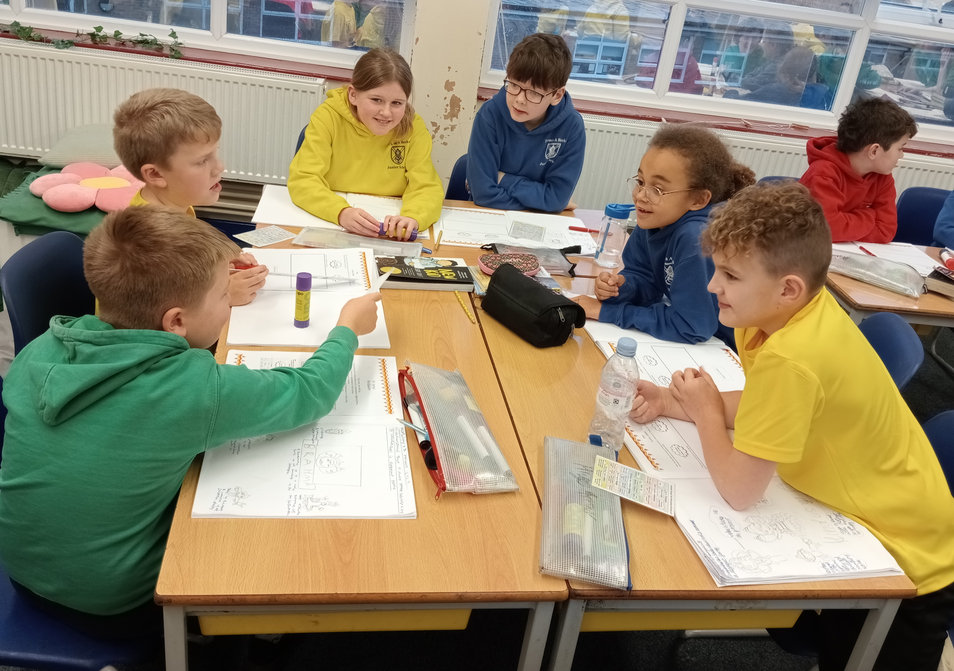
As a school, we have used evidence based research to examine how our curriculum is presented so that the children are able to remember key concepts by transferring it to their long term memory; creating schemas that the children can use and apply to different subject areas.
We have created our own bespoke knowledge organisers, making them explicit in the planning so that they are used to inform the children of the core elements of a unit of work, build their knowledge and use them for retrieval practice and spaced practice to allow the knowledge of that topic to become learnt. They are now an intrinsic part of History, Geography, Science, Art and DT learning.
SLT, year leaders and subject leaders continue to drive the use of memory and metacognitive strategies within planning including retrieval practice, spaced practice, use of concrete examples and prior knowledge, dual coding and quality questioning or elaboration. We are considerate of cognitive load in the classroom for the children, using visual cues on interactive whiteboards and discursive, active learning opportunities.
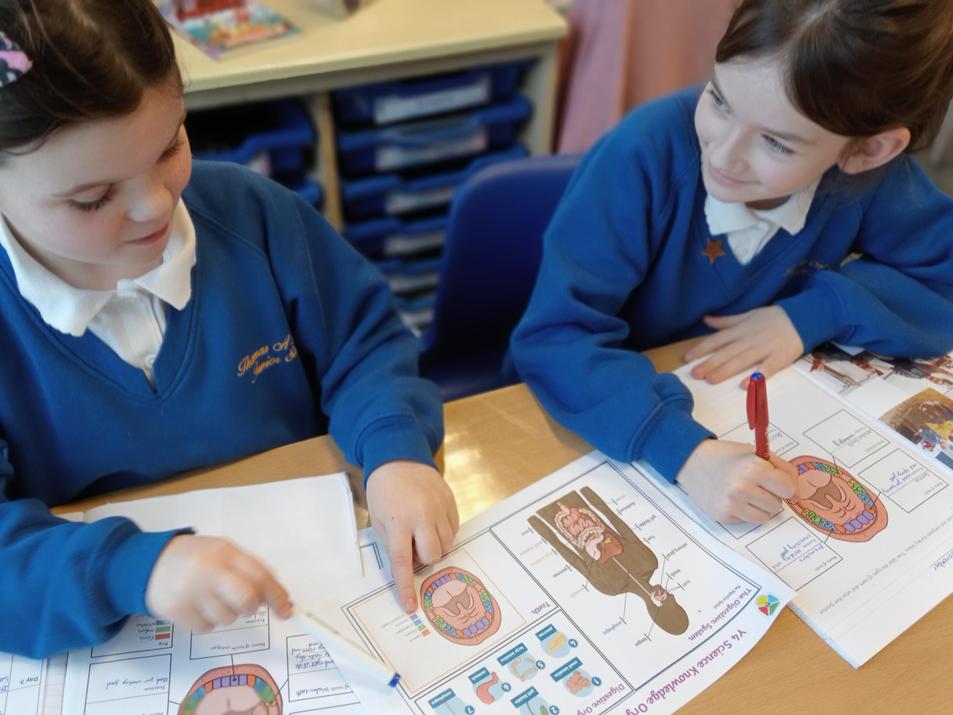 As a school we have embraced learning through talk, to build on the success of the common language of the TAB Way, using talk phrases to empower the children to be able to articulate their ideas in an assertive manner and discuss their learning, making connections within the subject they are learning about and across other aspects of the curriculum. Through talk becoming an integral part of learning at TAB Junior we are giving the children the skills to be able to talk their learning so that they understand what they know about themselves as a learner and what they need to work on to improve this so that they can successfully develop academic independence and resilience, thus beginning the metacognitive process of each individual knowing how they learn best. This is all part of our development of curriculum planning to allow time for the children to edit their work and be able to reflect on what they've done.
Such personalisation of the planning with regular retrieval and reflection opportunities allow teachers to adapt the planning to the needs of all children so that learning is remembered, and the children themselves to have a voice so that they become the driver of their own learning knowing what success looks like for them.
'When pupils spoke about a piece of prior learning that they were particularly proud of, they could use the 'talk phrases' to support them to explain the progression of learning that had taken place in order to attain the final outcome.' Ian Rogers LA adviser
'When speaking to pupils about their learning, pupils independently referred to the knowledge organisers when articulating the learning journey they had been on and showed how the examples of work on the organisers had supported them...' Ian Rogers LA adviser
'The impact of the focus on talk was clearly seen when talking to the children...phrases such as 'I agree because' and 'To add to what Harry said', were clearly used by the children in a very natural way' Memory and metacognition governor visit report
'A year 4 child explained how they (knowledge organisers) were really helpful in recalling information and making links from previous topics as well as helping them remember facts from current ones' Memory and metacognition governor visit report
The TAB Learning Challenge
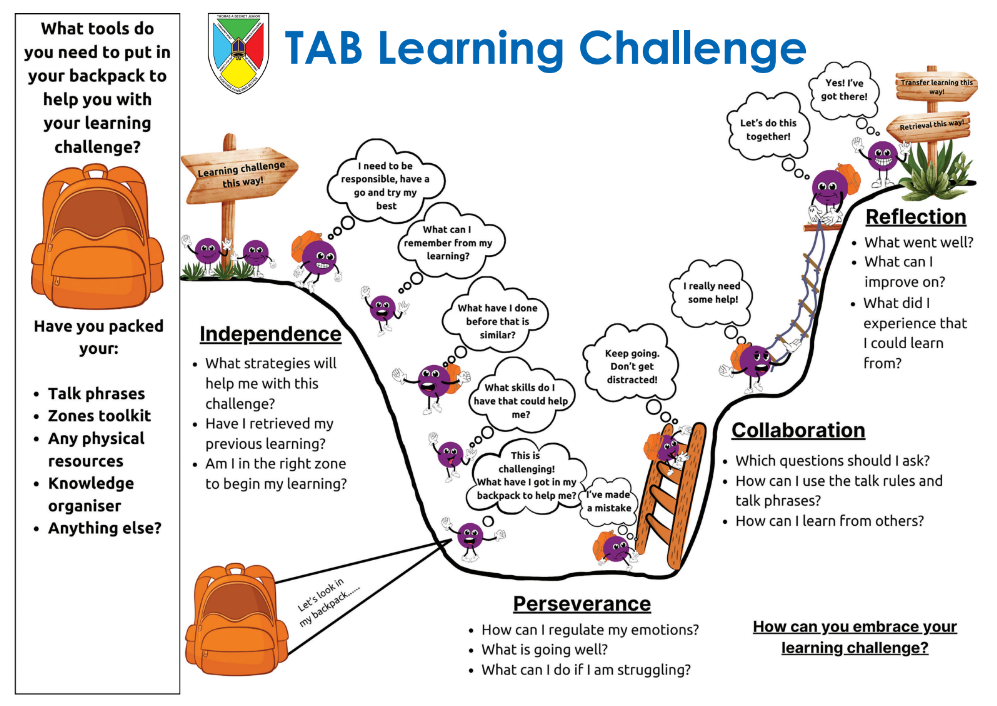
At TAB Junior, the TAB Learning Challenge helps children understand that real learning often involves getting stuck, feeling challenged and trying again. This approach is closely linked to the values of The TAB Way, supporting our belief that children grow best when they are encouraged to persevere, think independently, work with others and reflect on their learning.
The TAB Learning Challenge helps children recognise that feeling unsure or confused is a natural part of learning. As the children undertake their learning they discover how to use the TAB Learning Skills to help themselves move forward. They persevere when things feel difficult, show independence by trying different strategies and ideas, use collaboration to talk with others and share thinking, and practise reflection to understand what helped them succeed. Travelling through the challenge gives children confidence and shows them they can overcome difficulties.
This approach builds a strong growth mindset. Children understand that challenge is not something to avoid but a chance for their brains to grow. By working through tricky ideas, they develop deeper understanding and learn how to think in flexible, creative ways. The moment when learning “clicks” at the end of the challenge strengthens their self-belief and helps them feel proud of their effort and progress. The TAB Learning Challenge also nurtures a culture of teamwork and shared problem-solving, fully aligned with The TAB Way.
How Parents Can Use the TAB Learning Challenge at Home
Parents can support the TAB Learning Challenge at home by using the same language and learning skills.
Perseverance:
When your child feels stuck, remind them of the TAB Learning Challenge and that sticking with it will help them to succeed in the end. Encourage them to keep trying even when it’s tough.
Independence:
Ask questions such as, “What could you try next?” or “What strategy might help you?” This helps children take ownership of their learning.
Collaboration:
Suggest that they talk through ideas with you or someone else. Working together shows them that sharing thinking can help them move forward.
Reflection:
After a challenge, talk about what helped, what was tricky and what they learned. Reflection helps children recognise their progress and build confidence.
When children experience the same supportive messages at home and at school—that challenge is normal, mistakes help us grow and effort leads to success—they develop the resilience and confidence they need to thrive.
The TAB Learning Challenge strengthens the core TAB Learning Skills of Perseverance, Independence, Collaboration and Reflection, helping children become capable, confident learners in every part of their lives.
Teaching and Learning Workshop Presentation
21 01 26 memory and metacognition workshop for parents.pdf